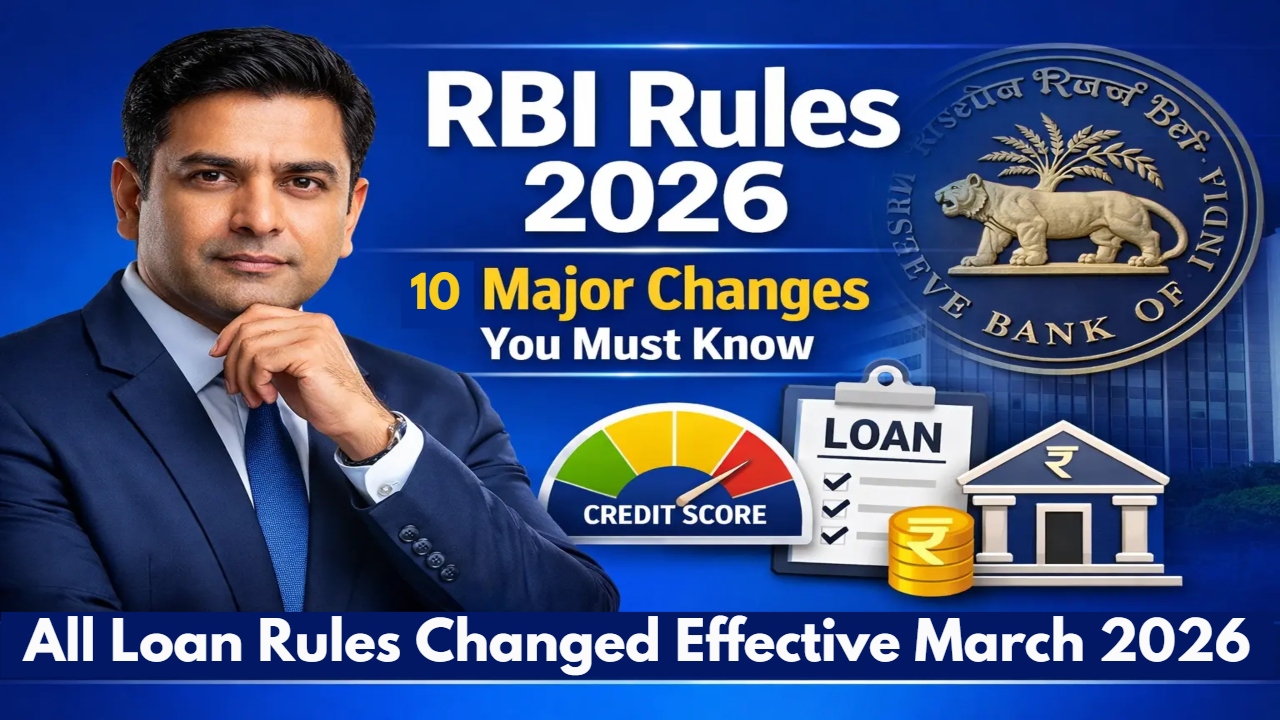
In today’s times, it is common for almost everyone to have taken out at least one or two loans. Some individuals have even obtained loans through fraudulent means. Consequently, significant changes regarding loan regulations have been implemented within the banking sector since March 2026. These new loan rules will impact car loans, home loans, personal loans, and various other types of credit. In India, the Reserve Bank of India (RBI) oversees and regulates banking norms. The RBI periodically issues guidelines in the best interest of its customers. The RBI has now released a new set of rules concerning loans. If you are planning to apply for a loan, or if you are currently paying EMIs on an existing loan, it is absolutely essential for you to be aware of these new regulations.
10 Major Loan Rules Effective from March 2026
1. Strict scrutiny of CIBIL Scores
Previously, when someone applied for a loan, not much emphasis was placed on their CIBIL score; loans could be obtained even despite having a low score. However, credit scores will now be given greater importance for loan approval. If your credit score is 700 or higher, there is a likelihood of securing a better interest rate.
2. Complete transparency in loan agreements
Previously, when loans were taken out, banks did not draft loan agreements with sufficient clarity; however, it is now mandatory for banks to explicitly list all charges, processing fees, prepayment penalties, and other conditions in the loan agreement.
3. Promotion of digital loan processes
Following the implementation of new rules, the application process for instant and online loans has been made significantly easier and paperless, ensuring that loan approval is completed in a shorter timeframe.
4. Changes to loan recovery rules
For individuals who have taken out a loan but are failing to pay their EMIs on time, a Code of Conduct has been implemented for Loan Recovery Agents. In instances involving abusive behavior towards customers, action will be taken against the bank.
5. Relief on prepayment charges
Compared to the past, the prepayment penalty on home loans and personal loans with floating interest rates has now been reduced somewhat. Furthermore, in certain cases, it has even been completely waived. However, all of this depends on the specific bank’s policy.
6. Strict measures in case of EMI bounces
Strict rules have been established regarding penalties and the impact on CIBIL scores in the event of an EMI bounce. In cases of consecutive defaults, the loan recovery process will be accelerated.
7. Optional loan insurance
Previously, whenever a loan was taken, banks would forcibly require applicants to purchase loan insurance. However, banks will no longer compel customers to take out loan insurance. Loan insurance will now be optional; if a customer wishes to obtain it, they may do so.
8. Interest rate reset rules
For floating-rate loans, banks are required to inform customers via SMS or email whenever the interest rate changes.
9. Clarity on processing fees
From now on, for anyone obtaining a loan from a bank, it is mandatory to clearly disclose the processing fees and other hidden charges. This will enhance loan transparency.
10. Rules for top-up loans and balance transfers
If a customer wishes to top up their loan or transfer their loan balance, new eligibility criteria have been implemented for this purpose, making the entire process more transparent.
Read Also:- Personal Loan of up to ₹5 Lakhs in Just 1 Minute! HDFC Bank Launches New Instant Loan Facility
What impact will this have on customers?
- Strict action will be taken in cases of EMI default.
- The importance of credit scores will increase.
- The loan process will become more transparent.
- Digital banking will receive a boost.
- Hidden charges will decrease.
Keep these points in mind before taking out a loan
- Check your credit score before taking out a loan.
- Be sure to compare interest rates and loan tenures.
- Keep your EMI within 40–50% of your monthly income.
- Apply for a loan only through the official bank website or app.

Hi, I’m Ronak, a news writer covering the latest updates in automobiles, education, smartphones, and trending topics. I focus on delivering simple, clear, and timely news to keep readers informed about what’s happening around the world.