Hello Friends! Are you looking to invest in the stock market, or have you already invested? Would you like to know the predictions regarding the potential fluctuations in your shares? If so, you have landed on exactly the right page. On this page, you will find information regarding Bank of Baroda share price target 2030, Bank of Baroda share price in 1997, Bank of baroda share price history, Bank of Baroda share price Chart, and much more. Furthermore, this page provides details on Bank of Baroda‘s share price targets 2026, 2027, 2028, 2029, 2030, 2040, and beyond.
Bank of Baroda Company Information
| Industry | Banking Financial services |
| Founded | 20 July 1908; 117 years ago |
| Founder | Sayajirao Gaekwad III |
| Headquarters | Vadodara, Gujarat, India |
| Key people | Debadatta Chand (MD & CEO) |
Bank of Baroda Share Price Target Overview
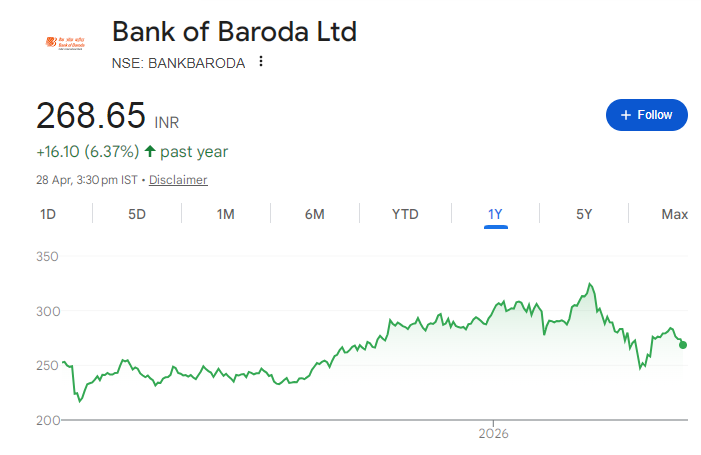
- Current Price – 268.65
- Open – 270.00
- High – 272.06
- Low – 265.61
- Mkt cap – 1.38LCr
- P/E ratio – 7.14
- 52-wk high – 325.50
- 52-wk low – 212.55
- Dividend – 3.11%
- Qtrly div amt – 2.09
Bank of Baroda Share Price Chart
Bank of Baroda Share Price Target Tomorrow
| Bank of Baroda Share Price Target Years | Bank of Baroda Share Price Target |
| 2026 | ₹330 |
| 2027 | ₹350 |
| 2028 | ₹370 |
| 2029 | ₹400 |
| 2030 | ₹430 |
Bank of Baroda Share Price Target 2026
The target for Bank of Baroda’s share price in 2026 is projected to range between ₹325 and ₹330. As of the end of April 2026, Bank of Baroda’s share price stood at ₹268.65. Compared to the previous year, Bank of Baroda’s share price has witnessed an increase this year.
Bank of Baroda Share Price Target 2027
The target for Bank of Baroda’s share price in 2027 is projected to range between ₹345 and ₹350. On 28 April 2026, Bank of Baroda Share price NSE is 268.65 INR. Compared to last year, no significant difference has been observed in the share price of Bank of Baroda. The share price has increased by approximately 20-30 rupees.
Bank of Baroda Share Price Target 2030
The target for Bank of Baroda’s share price in 2030 is projected to range between ₹425 and ₹430. Over the past several years, the company has generated substantial profits, and investors, too, have earned handsome returns proportionate to their shareholdings. We remain optimistic that the company will continue to generate profits in the future, thereby ensuring continued returns for its investors.
Risks and Challenges Of Bank of Baroda Share Price
Here are 8 key factors affecting the growth of Bank of Baroda share price:
1. Net Interest Margin (NIM) Pressure – Rising deposit costs and lower lending yields are reducing margins, impacting core profitability.
2. Slow Profit Growth – Recent results show only modest profit growth, with reliance on non-core income instead of strong core banking earnings.
3. Dependence on Economic Conditions – Bank performance depends heavily on India’s economic growth. Any slowdown can reduce loan demand and increase defaults.
4. Asset Quality Risk (NPAs) – Although NPAs are currently low, any economic stress can increase bad loans and hurt profitability.
5. Competition in Banking Sector – Strong competition from private banks and NBFCs puts pressure on loan growth, deposits, and margins.
6. CASA Ratio Decline – Declining low-cost deposits (CASA) increases funding cost, which negatively affects margins.
7. Operational & Efficiency Challenges – Lower operating profit ratios and inconsistent performance metrics raise concerns about efficiency.
8. Stock Volatility & Market Sentiment – The stock has shown mixed performance and sometimes underperformed the broader market, making it volatile.
Read Also:- Bajaj Electricals Share Price Target Tomorrow From 2026 to 2030 – Current Chart, Market Overview
Key Factors Affecting Growth Bank of Baroda Share Price
Here are 8 key factors affecting the growth of Bank of Baroda share price:
1. Strong Loan Growth – Increase in retail, MSME, and corporate lending boosts interest income and overall earnings.
2. Improvement in Asset Quality – Lower NPAs (bad loans) and better recovery improve profitability and investor confidence.
3. Net Interest Margin (NIM) Stability – Stable or improving margins between lending and deposit rates support earnings growth.
4. Growth in CASA Deposits – Higher low-cost deposits (current and savings accounts) reduce funding costs and improve margins.
5. Digital Banking Expansion – Investment in digital platforms improves customer experience, reduces costs, and increases efficiency.
6. Government Support for PSU Banks – Strong backing from the government improves stability and growth prospects.
7. Economic Growth & Credit Demand – A strong Indian economy increases demand for loans, boosting bank performance.
8. Cost Control & Operational Efficiency – Better cost management and improved efficiency ratios help increase profitability.
Bank of Baroda Shareholding Pattern
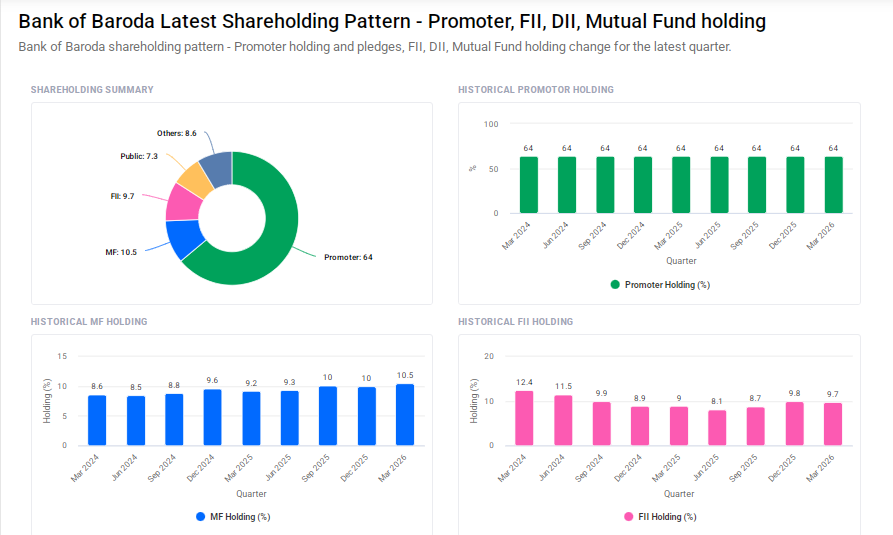
| Promoter | 64% |
| FII | 9.7% |
| DII | 19% |
| Public | 7.3% |
Income Statement Of Bank of Baroda
|
All values in INR
|
Mar 2025
|
Jun 2025
|
Sep 2025
|
Dec 2025
|
|---|---|---|---|---|
|
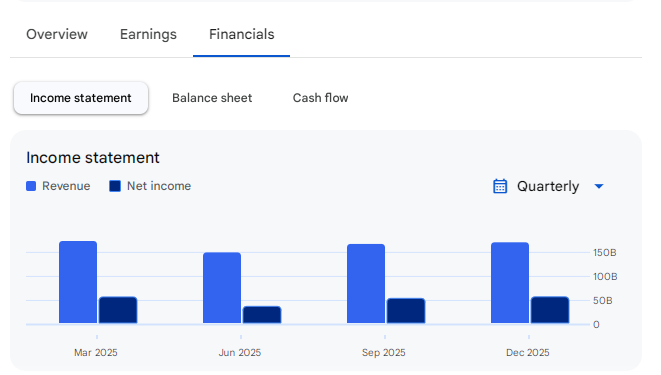
Revenue
|
170.54B
|
146.82B
|
164.45B
|
167.85B
|
|
Cost of goods sold
|
–
|
–
|
–
|
–
|
|
Cost of revenue
|
–
|
–
|
–
|
–
|
|
Research and development expenses
|
–
|
–
|
–
|
–
|
|
Total research and development expenses
|
–
|
–
|
–
|
–
|
|
Selling, general, and admin expenses
|
127.31B
|
46.72B
|
44.12B
|
44.89B
|
|
Operating expense
|
101.44B
|
95.12B
|
97.50B
|
97.62B
|
|
Total operating expenses
|
101.44B
|
95.12B
|
97.50B
|
97.62B
|
|
Operating income
|
69.11B
|
51.70B
|
66.95B
|
70.24B
|
|
Other non operating income
|
–
|
–
|
–
|
–
|
|
EBT including unusual items
|
70.50B
|
53.35B
|
68.05B
|
71.17B
|
|
EBT excluding unusual items
|
70.50B
|
53.35B
|
68.05B
|
71.17B
|
|
Income tax expense
|
16.04B
|
18.18B
|
16.25B
|
16.17B
|
|
Effective tax rate
|
22.75%
|
34.07%
|
23.87%
|
22.71%
|
|
Other operating expenses
|
-25.87B
|
48.40B
|
53.38B
|
52.72B
|
|
Net income
|
54.20B
|
34.69B
|
51.34B
|
54.43B
|
|
Net profit margin
|
31.78%
|
23.63%
|
31.22%
|
32.43%
|
|
Earnings per share
|
9.78
|
8.78
|
9.30
|
9.77
|
|
Interest and investment income
|
–
|
–
|
–
|
–
|
|
Interest expense
|
–
|
–
|
–
|
–
|
|
Net interest expenses
|
–
|
–
|
–
|
–
|
|
Depreciation and amortization charges
|
–
|
–
|
–
|
–
|
|
EBITDA
|
–
|
–
|
–
|
–
|
|
Gain or loss from assets sale
|
–
|
–
|
–
|
–
|

Hi, I’m Ronak, a news writer covering the latest updates in automobiles, education, smartphones, and trending topics. I focus on delivering simple, clear, and timely news to keep readers informed about what’s happening around the world.