Hello Friends! Are you looking to invest in the stock market, or have you already invested? Would you like to know the predictions regarding the potential fluctuations in your shares? If so, you have landed on exactly the right page. On this page, you will find information regarding DMART share price RSI, DMart share price Chart, DMART share Price IPO, DMart Share Price Moneycontrol, Dmart share price today live, and much more. Furthermore, this page provides details on DMart‘s share price targets 2026, 2027, 2028, 2029, 2030, 2040, and beyond.
DMart Company Information
| Industry | Retail Genre Supermarket Hypermarket |
| Founded | 15 May 2002; 23 years ago |
| Founder | Radhakishan Damani |
| Headquarters | Powai, Mumbai, Maharashtra, India |
| Key people | Radhakishan Damani (Chairman) Ignatius Navil Noronha (CEO) |
DMart Share Price Target Overview
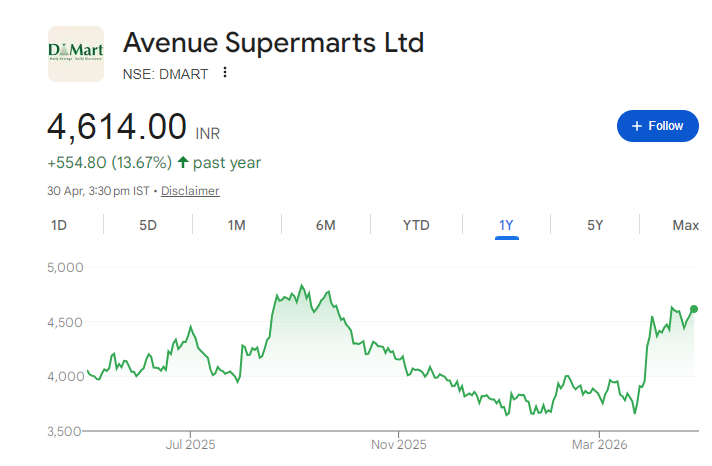
- Current Price – 4,614.00
- Open – 4,584.00
- High – 4,615.00
- Low – 4,511.00
- Mkt cap – 2.99LCr
- P/E ratio – 105.07
- 52-wk high – 4,949.50
- 52-wk low – 3,529.00
- Dividend – N/A
- Qtrly div amt – N/A
DMart Share Price Chart
DMart Share Price Target Tomorrow
| DMart Share Price Target Years | DMart Share Price Target |
| 2026 | ₹5000 |
| 2027 | ₹5600 |
| 2028 | ₹6200 |
| 2029 | ₹6800 |
| 2030 | ₹7400 |
DMart Share Price Target 2026
The target for DMart’s share price in 2026 is projected to range between ₹4900 and ₹5000. As of the start of May 2026, DMart’s share price stood at ₹4,614.00. Compared to the previous year, DMart’s share price has witnessed an increase this year.
DMart Share Price Target 2027
The target for DMart’s share price in 2027 is projected to range between ₹5500 and ₹5600. On 2 May 2026, DMart Share price NSE is 4,614.00 INR. Compared to last year, no significant difference has been observed in the share price of DMart. The share price has increased by approximately 550-600 rupees.
DMart Share Price Target 2030
The target for DMart’s share price in 2030 is projected to range between ₹7300 and ₹7400. Over the past several years, the company has generated substantial profits, and investors, too, have earned handsome returns proportionate to their shareholdings. We remain optimistic that the company will continue to generate profits in the future, thereby ensuring continued returns for its investors.
Risks and Challenges Of DMart Share Price
Here are 8 key factors affecting the growth of DMart share price:
1. Rising Competition from Quick Commerce – Platforms like Blinkit, Zepto, and Instamart are growing very fast with 10–15 minute delivery. This is taking away urban customers from DMart.
2. High Valuation Risk – DMart stock trades at premium valuation. If growth slows even slightly, the share price can fall sharply due to valuation correction.
3. Slow Store Expansion Model – DMart follows an ownership-based model (buying land/stores), which slows expansion compared to competitors using lease models.
4. Dependence on Physical Stores – Most revenue comes from offline stores. Any shift toward online shopping or reduced footfall can directly impact sales.
5. Weak Online Presence (E-commerce Lag) – Compared to competitors, DMart’s online business (DMart Ready) is still small, limiting growth in the fast-growing digital retail segment.
6. Margin Pressure – Rising costs (staff, operations, expansion) and competition are putting pressure on profit margins, affecting earnings growth.
7. Slowing Same-Store Sales Growth – Growth in existing stores has slowed in recent years, which is a key concern for long-term performance.
8. Limited Market Share & Expansion Scope – DMart still has a relatively small share of India’s retail market and limited reach, which may restrict future growth if expansion is slow.
Read Also:- Asian Paints Share Price Target Tomorrow From 2026 to 2030 – Current Chart, Market Overview
Key Factors Affecting Growth DMart Share Price
Here are 8 key factors affecting the growth of DMart share price:
1. Store Expansion (New DMart Outlets) – Opening new stores across India increases revenue and market presence. Expansion is a major long-term growth driver.
2. Same-Store Sales Growth (SSSG) – Growth in sales from existing stores shows strong demand and business efficiency, which boosts investor confidence.
3. Strong Value Pricing Strategy – DMart’s low-price strategy attracts middle-class customers and ensures steady footfall, especially during inflation.
4. Rising Consumption in India – Increasing income levels and urbanization are driving higher spending on groceries and essentials, supporting growth.
5. Private Label Products – DMart’s own brands offer higher margins compared to third-party products, improving profitability.
6. Operational Efficiency & Cost Control – Efficient inventory management and low-cost operations help maintain strong margins compared to competitors.
7. Growth of DMart Ready (Online Business) – Expansion of its online platform can capture digital demand and support future growth.
8. Strong Management & Business Model – Disciplined expansion strategy and conservative financial management make the business stable and reliable for long-term growth.
DMart Shareholding Pattern
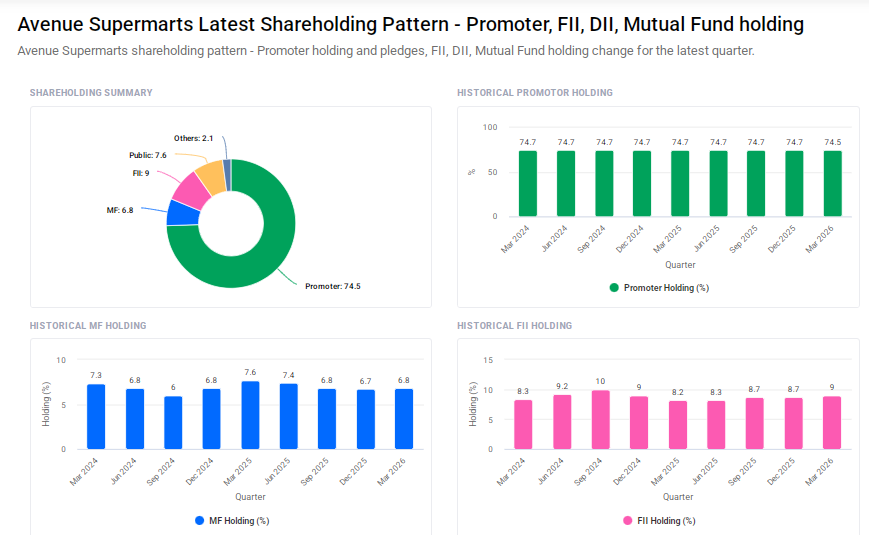
| Promoter | 74.5% |
| FII | 9% |
| DII | 8.8% |
| Public | 7.6% |
Income Statement Of DMart
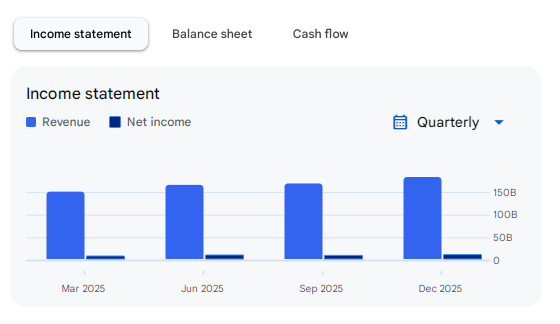
|
All values in INR
|
Mar 2025
|
Jun 2025
|
Sep 2025
|
Dec 2025
|
|---|---|---|---|---|
|
Revenue
|
148.72B
|
163.60B
|
166.76B
|
181.01B
|
|
Cost of goods sold
|
129.89B
|
138.55B
|
141.63B
|
153.31B
|
|
Cost of revenue
|
129.89B
|
138.55B
|
141.63B
|
153.31B
|
|
Research and development expenses
|
–
|
–
|
–
|
–
|
|
Total research and development expenses
|
–
|
–
|
–
|
–
|
|
Selling, general, and admin expenses
|
3.22B
|
3.47B
|
3.77B
|
3.98B
|
|
Operating expense
|
11.56B
|
14.37B
|
15.53B
|
15.75B
|
|
Total operating expenses
|
141.45B
|
152.92B
|
157.16B
|
169.06B
|
|
Operating income
|
7.26B
|
10.67B
|
9.60B
|
11.95B
|
|
Other non operating income
|
-941.50M
|
194.30M
|
195.70M
|
169.30M
|
|
EBT including unusual items
|
7.20B
|
10.57B
|
9.45B
|
11.75B
|
|
EBT excluding unusual items
|
7.06B
|
10.57B
|
9.45B
|
11.75B
|
|
Income tax expense
|
1.70B
|
2.85B
|
2.60B
|
3.19B
|
|
Effective tax rate
|
23.53%
|
26.92%
|
27.51%
|
27.18%
|
|
Other operating expenses
|
5.94B
|
8.59B
|
9.23B
|
9.09B
|
|
Net income
|
5.51B
|
7.73B
|
6.85B
|
8.56B
|
|
Net profit margin
|
3.70%
|
4.72%
|
4.11%
|
4.73%
|
|
Earnings per share
|
9.50
|
12.72
|
11.44
|
13.13
|
|
Interest and investment income
|
878.30M
|
–
|
–
|
–
|
|
Interest expense
|
-186.40M
|
-293.00M
|
-349.60M
|
-368.20M
|
|
Net interest expenses
|
691.90M
|
-293.00M
|
-349.60M
|
-368.20M
|
|
Depreciation and amortization charges
|
2.41B
|
2.32B
|
2.53B
|
2.68B
|
|
EBITDA
|
8.85B
|
12.85B
|
12.03B
|
13.54B
|
|
Gain or loss from assets sale
|
–
|
–
|
–
|
–
|

Hi, I’m Ronak, a news writer covering the latest updates in automobiles, education, smartphones, and trending topics. I focus on delivering simple, clear, and timely news to keep readers informed about what’s happening around the world.